How Polyethylene Floats Enhance Durability in Marine Structures
Would you trust a swimming zone marked by floats that fade in the sun?
In the UAE, that’s a real question. The heat is intense, the salt water never lets up, and boats and jet skis are never far from the swimmers. A float has one job out there: show people exactly where the safe water ends. When it fades, cracks or sits low in the water, the boundary it marks stops meaning anything.
That’s why the material and build behind your floats matter more than you’d think. Polyethylene floats are made for these conditions, and in this guide we’ll show you how they keep marine boundaries, barriers and safety zones visible and reliable for the long run.
Why Marine Structures Are So Hard on Floats
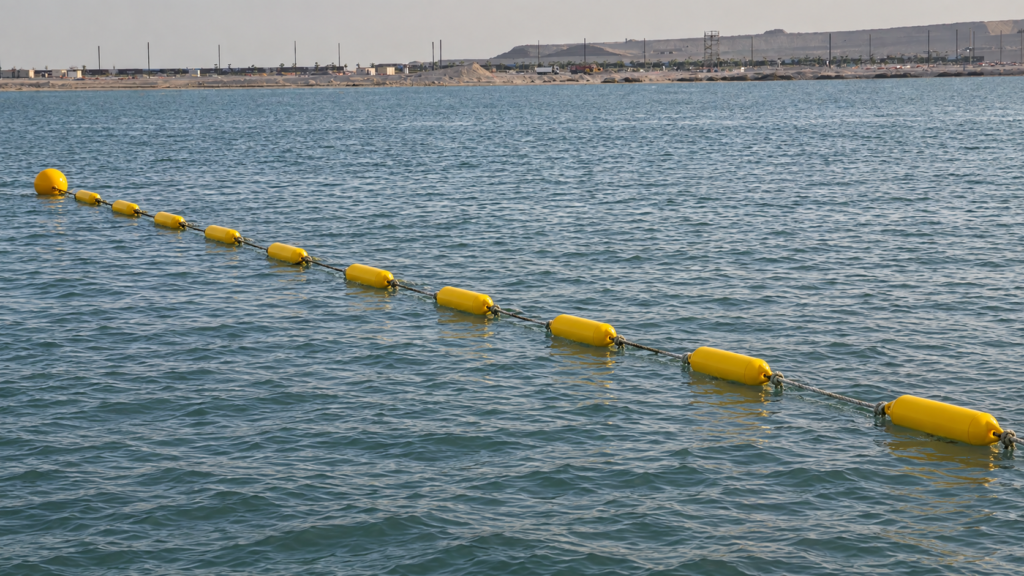
Open water is one of the harshest places to leave any product outdoors. A float faces several threats at once:
- Relentless UV exposure, which fades colour and makes weak plastics brittle
- Salt water, which corrodes metal and wears down poor materials
- Impact, from waves, debris, vessels and tow lines
- Water absorption, which quietly steals buoyancy over time
That last one is easy to miss. A float can look perfectly fine and still be sinking because it has taken on water. Durability in marine work is really about staying afloat, staying visible and staying intact, all at the same time.
Did you know? In hot coastal regions like the UAE, UV exposure is one of the fastest ways to age an unprotected plastic. Colour that only sits on the surface can fade and chalk far sooner than colour built into the material.
What Makes Polyethylene Floats So Durable
Polyethylene is tough, flexible and resistant to salt water. Add the right manufacturing method, and you get a float that shrugs off conditions that destroy lesser materials.
Here is what sets a well-made one apart:
Rotational Moulding for a Seamless Shell
The Seavoy SDF Series is a good example. These floats are made as a single-piece unit, rotationally moulded from linear low-density polyethylene (LLDPE). There are no glued joints or welded seams to split open under stress, which is often where cheaper floats fail first.
Foam-Filled for Strength and Stability
Inside that shell sits polyurethane foam. This does two jobs. It adds buoyancy, and it gives the float extra strength and stability in the water. Even if the outer wall is scratched or knocked, the float keeps riding properly instead of filling with water and sinking.
Colour That Is Part of the Material
Instead of being painted on, the colour is fully embedded within the LLDPE raw material. That means the brightness lasts and the float resists fading. For a product whose whole job is to be seen, that is not a small detail.
Quick tip: When comparing suppliers, ask two questions. Is the colour embedded in the polyethylene or applied on top? And is the float foam-filled or hollow? The answers say a lot about long-term durability.
Durable Polyethylene Floats in Action
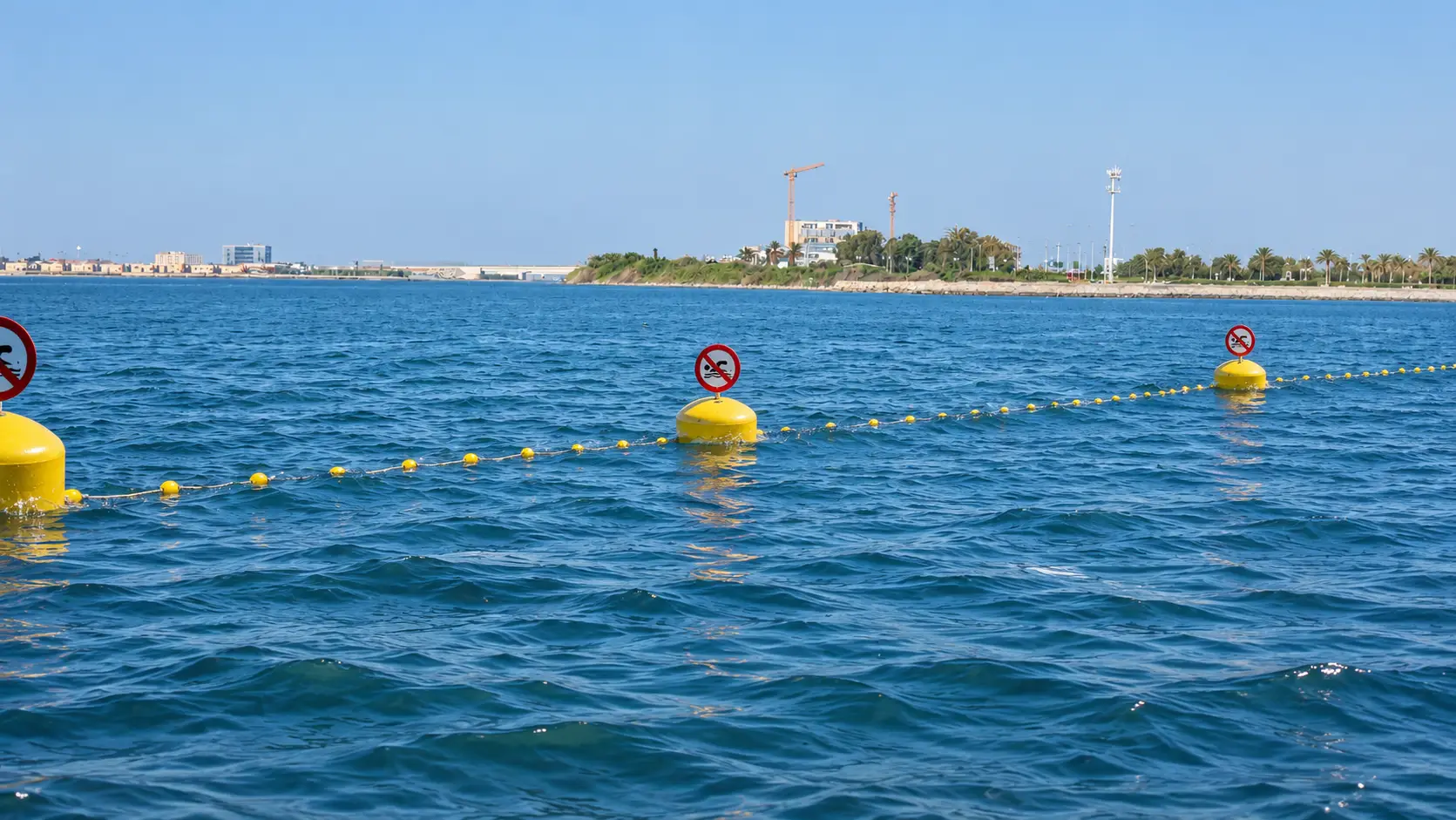
Where do these floats actually earn their keep? The Seavoy SDF Series is used for:
- Construction and restricted area demarcation
- Swimming area demarcation
- Marine safety zones
- Jellyfish barriers
- Security barriers
In every one of these, the float has a simple job: mark a boundary and stay put. Failure here isn’t a small inconvenience. It can mean a swimmer wandering into a boat lane or an unauthorised vessel drifting into a restricted area.
Choosing the Right Polyethylene Floating Systems
A float is only one part of the story. Strong polyethylene floating systems depend on matching the float to the job, then connecting everything with the right hardware.
SDF Floats are available in yellow, red and white, so you can choose the colour that stands out best against your water and surroundings.
Single or Double Eyes: Why It Matters
Floats can be supplied with single or double mooring eyes. Double eyes let you run floats in a continuous line, which suits long barriers and swimming lanes. Single eyes work well for individual markers. Choosing correctly at the start saves awkward rework on site.
Quick tip: For longer barriers or areas with stronger currents, think about larger diameters and secure connection points. A float can only hold a line as well as its attachments allow.
Polyethylene Floats vs EVA Floats
Polyethylene isn’t the answer to every marking job. For lighter, more flexible applications, EVA floats are a strong partner. Bay Marine supplies EVA floats in the NYE, YQE and SHE ranges, made from high-density EVA foam. They are lightweight, highly visible and designed to handle sunlight and salt water. They are commonly threaded into swimming lines to separate swimmers from boats and jet skis.
Their buoyancy scales with size too, from about 160 g on the smallest model up to 2,400 g on the largest, so you can pick the right float for the line.
Here is a simple way to compare them:
Polyethylene (Seavoy SDF) | EVA Floats | |
Build | Rotationally moulded LLDPE shell, foam-filled | High-density EVA foam |
Best for | Larger boundaries, barriers, restricted zones | Swimming lines, lighter markers |
Feel | Rigid, robust | Lightweight, flexible |
Sizes | 250 mm to 600 mm diameter | Compact range, 160 g to 2,400 g buoyancy |
Many waterfront sites use both, with larger polyethylene units for main boundaries and lighter EVA floats for swim lines.
How to Choose Polyethylene Floats: A Quick Checklist
Before you order, check the following:
- Is the float UV-stabilised, with colour embedded in the material?
- Is it foam-filled, so it stays buoyant even if the shell is damaged?
- Is it a single-piece construction with no seams to fail?
- Does the diameter suit the length and demands of your barrier?
- Are single or double eyes the better fit for your layout?
- Will the colour stand out clearly against your water and backdrop?
Simple Habits to Extend Float Life
Tough floats still appreciate a little care:
- Rinse off algae and marine growth during regular inspections
- Check mooring eyes, chains and connectors for wear
- Look over floats after storms or heavy boat traffic
- Replace any unit that sits noticeably lower than its neighbours
A short routine check now can save you a costly replacement later.
Polyethylene Floats from Bay Marine: Built for the UAE's Waters
Choosing the right float is easier when your supplier understands the conditions it will face. Bay Marine is a marine safety equipment supplier serving Dubai, Abu Dhabi and the wider UAE, where strong sun, warm salt water and busy waterfronts test every product that goes into the sea.
For boundaries and barriers, Bay Marine offers the Seavoy SDF Series demarcation floats. These are single-piece, rotationally moulded polyethylene floats, filled with polyurethane foam and available in five diameters from 250 mm to 600 mm. With embedded colour in yellow, red or white and a choice of single or double mooring eyes, they suit swimming areas, restricted zones, jellyfish barriers and security lines.
For lighter marking and swimming lines, the EVA floats range (NYE, YQE and SHE) gives you a lightweight, flexible, highly visible alternative. Many waterfront projects combine both, and Bay Marine can help you work out the right mix for your site.
Not sure which size or colour fits your project? Get in touch with the Bay Marine team and share your site details, and they’ll help you choose polyethylene floats that will hold up for the long run.
Conclusion
The sea is unforgiving, and the floats that mark our boundaries have to keep working long after installation day. Polyethylene floats do that by combining a seamless, rotationally moulded shell, a foam-filled core and colour that is built in rather than painted on. Pair them with well-planned mooring and regular checks, and you get a system that stays visible, buoyant and reliable through harsh UV, salt and impact.
If you are planning a swimming area, a restricted zone or a marine barrier, choose the float for the conditions it will face. Explore Bay Marine’s Seavoy demarcation floats for heavy-duty boundaries, and compare them with the EVA floats range for lighter swimming lines.
FAQ: Polyethylene Floats
1.What are polyethylene floats used for?
Polyethylene floats mark and protect marine areas. Typical uses include swimming area demarcation, construction and restricted zones, marine safety zones, jellyfish barriers and security barriers.
2.Why are durable polyethylene floats better for marine use?
Durable polyethylene floats resist salt water and UV, and a rotationally moulded single-piece build removes weak seams. Foam filling keeps them buoyant, and embedded colour helps them resist fading.
3. What are Seavoy SDF demarcation floats made of?
They are rotationally moulded from UV-stabilised linear low-density polyethylene (LLDPE) and filled with polyurethane foam. They come in yellow, red and white, in diameters from 250 mm to 600 mm.
4. What is the difference between polyethylene floats and EVA floats?
Polyethylene floats are rigid, foam-filled units suited to larger boundaries and barriers. EVA floats are lightweight and flexible, and are commonly used on swimming lines and lighter marking jobs.
5. What makes a good polyethylene floating system?
A good system matches float size to the site, uses the right mooring eyes (single or double) and relies on strong connectors. High-visibility colours and regular inspection keep it safe and reliable.