Essential Oil Spill Equipment : What Ports and Marine Operators Should Keep Ready
Most spill plans look solid on paper. The real test comes at a fuel berth on a busy morning, when a coupling fails and someone has to answer a simple question: where is the boom, and how quickly can we get it in the water?
Spill risk in ports, jetties, shipyards, and marinas across UAE is everyday risk. Thus, the equipment used for oil spills must be on-site, regularly inspected and ready for use before it’s needed.
Bay Marine’s product catalog helps customers understand the importance of onsite oil spill equipment and how their products complete an inventory of onsite equipment for an efficient spill response.
What Spill Response Equipment Should Ports Have Ready?
An oil spill response system must have containment booms that limit oil spread, spill response trays to capture leaks, and clean-up materials such as sorbents and recovery containers, as well as the PPE to protect responders. In areas of active dredging and construction, silt curtains control the sediments generated from these operations.
A simple way to plan it is by job:
- Prevent: catch small leaks before they reach the water
- Contain: stop a spill from spreading
- Recover: remove oil and dispose of it correctly
- Protect: keep people and the surrounding area safe
Oil Containment Booms: Containing the Spill First
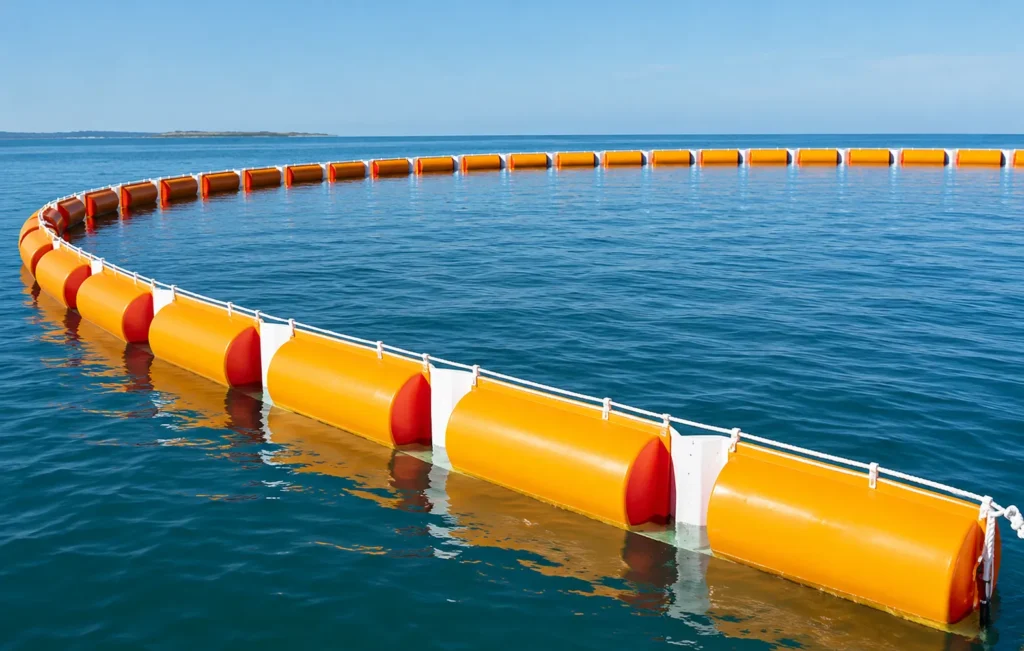
Once oil reaches the water, speed matters. Booms limit how far it travels, and they also concentrate oil in thicker surface layers, which makes recovery easier. epa
Bay Marine supplies oil containment booms designed to control and contain oil spills, debris and surface pollutants in both marine and inland waters. For a port, that covers several practical situations:
- Surrounding a vessel during bunkering or cargo transfer
- Isolating a berth or loading area
- Protecting an intake, slipway or marina entrance
- Holding floating debris back from a work area
Placement matters as much as the product. A boom stored in a distant warehouse loses the minutes you can least afford. Keep it close to high-risk berths, and make sure the crew can reach it without hunting for keys.
Oil Spill Trays: Stopping Small Leaks at the Source
Not every incident is a headline. Many begin as a slow drip from a hose connection, pump or fuel transfer point, and small leaks add up over weeks.
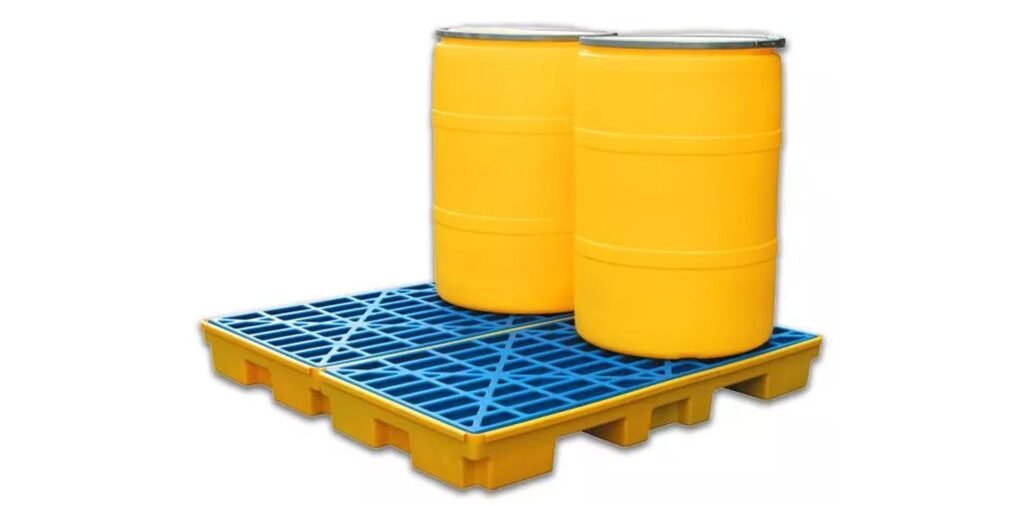
Bay Marine’s oil spill trays are designed for efficient containment and collection of oil and fuel spills, giving sites a practical way to manage minor spills and support their environmental safety measures. They suit:
- Bunkering and fuel transfer points
- Pump and equipment maintenance areas
- Storage and handling zones on quays and jetties
Trays work on the smaller end of the scale, which is where most incidents start. A leak caught on a tray never becomes a boom deployment.
Silt Curtains for Construction and Dredging Zones

Oil isn’t the only pollutant ports manage. Piling, dredging and reclamation stir up sediment that clouds the water and affects marine life.
Bay Marine’s silt curtains, also known as turbidity curtains, are designed to control sediment and suspended particles during marine operations. Ports with active construction alongside daily operations often keep these with their spill kit, so both are covered by the same environmental plan.
Oil Spill Response Equipment for Recovery and Cleanup
Containment buys you time. Recovery finishes the job. A complete kit of oil spill response equipment includes:
- Skimmers to lift oil from the water surface
- Sorbent pads, rolls and booms to pick up thin films and residue
- Recovery tanks, drums or bags for collected oil and contaminated material
- PPE: chemical-resistant gloves, boots, coveralls, eye protection and life jackets
- Barrier tape and signs to control access to the affected area
Treat sorbents and bags as consumables, and replace anything used straight after an incident or drill.
Why One Supplier Across Your Marine Safety Needs Helps
A spill response doesn’t happen in isolation. Responders work around vessels, channels, moorings and public water, so the surrounding marine safety setup matters.
Bay Marine, based in Musaffah, Abu Dhabi, supplies a wider range of marine safety and Aids to Navigation (AtoN) products, including buoys and beacons, navigation lanterns, demarcation lines, docking and mooring equipment, and polyform buoys and fenders. In practice, sourcing environmental protection products from a supplier that also understands your waterside layout means:
- Fewer vendors to coordinate
- Products chosen with your berth and channel setup in mind
- Support across supply, installation, maintenance and custom fabrication
How Often Should You Inspect Your Oil Spill Equipment?
Equipment that sits untouched is equipment that quietly fails. A simple routine works well:
When | What to do |
Monthly | Visual check of booms, trays and sorbent stock |
After every drill or incident | Replace used items and inspect what was deployed |
Annually | Review the full kit against current site risks |
Deployment drills deserve the same attention. A crew that has handled the boom once will move faster than one reading the instructions for the first time.
A Quick Readiness Check for Your Site
- Do high-risk points, such as fuel transfer areas, have oil spill trays?
- Is boom stored near the water, with a clear route to it?
- Is sorbent stock full, dry and easy to find?
- When did the team last run a deployment drill?
Any “not sure” answer is your starting point.
Conclusion
Good spill response is built long before the spill. The right oil spill equipment, positioned at the right places and checked regularly, turns a potential crisis into a contained incident.
If you’re reviewing your site’s kit, explore Bay Marine’s environmental protection range or contact the team to discuss what suits your port, jetty or shipyard.
FAQ Section
1. What materials are needed to clean up an oil spill at a port?
Oil containment booms, spill trays, sorbents, and skimmers should all be on a spill cleanup kit inventory list for a port, along with spill recovery containers, protective clothing, and signs and barriers to warn and prevent entry to the cleanup site. Your site and what you move at your facility determine the oil spill response kit inventory you should have.
2. What is the purpose of oil spill response equipment?
Oil spill response equipment is for controlling, removing, and protecting. It’s for the cleanup process and the team carrying it out, as well as protecting the public and environment. Containment booms, skimming equipment, and sorbents are recovery and cleanup devices.
3. What is an oil spill boom and what is an oil spill tray?
Spill booms are intended to keep spills of oil contained while floating in open water. Spill trays serve the purpose of catching leaks as small as they may be at the source, for instance, a leaking pump or hose connection, before they get to open water.
4. Where should spill cleanup gear be located?
Oil spill cleanup kits should be located in close proximity to the most high risk spill locations, including fueling docks, transfer zones, and where oil cleanup gear is needed in a timely fashion for all team members.
5. What oil spill equipment does Bay Marine supply?
Bay Marine supplies oil containment booms and oil spill trays, along with silt curtains for sediment control, for ports and coastal projects. Contact the team to discuss the right fit for your site.