Marine Navigation Lanterns for Channel Marking: Importance, Applications and Benefits
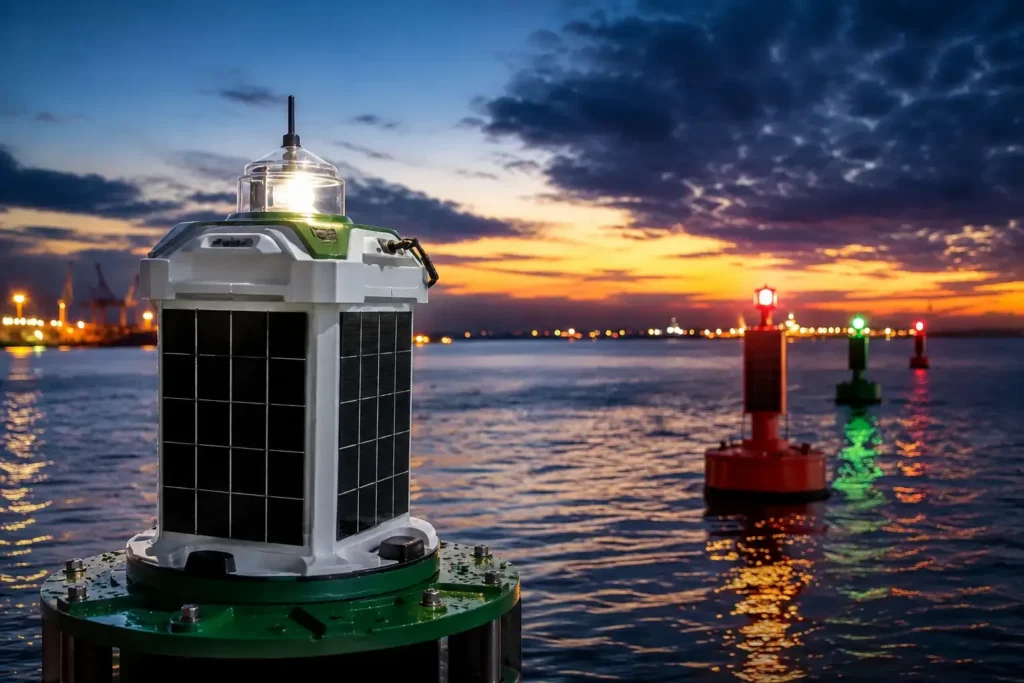
Safe marine navigation the water rely on clear Aids to Navigation. In ports, harbours, open water zones, and route areas, buoys and beacons show where channels run. They also point out hazards, limits, and other key spots. When it gets dark or visibility drops, mariners can spot these markers better with navigation lanterns and navigation lights.
Marine navigation lanterns for Aids to Navigation are not set on the hull like typical boat lights. Instead, they are fixed to navigation marker structures, like buoys and beacons. The goal is simple. The lantern gives a strong light that helps vessels see the marked areas and stay on the planned route.
What Are Marine Navigation Lanterns?
Marine Navigation lanterns are made for marine use. They are used on buoys, beacons, and other navigation supports. In night conditions or low visibility, they send a clear light signal. This makes it easier for mariners to notice key points along the waterway.
Because of this, Marine navigation lanterns are used as part of Aids to Navigation. They show up in ports, harbours, along the coast, offshore areas, and in shipping channels.
Marine Navigation lanterns are commonly installed on:
- Navigation marker buoys
- Fixed navigation beacons
- Channel markers
- Port and harbour navigation structures
- Offshore navigational aids
- Aids to Navigation installations
The right lantern can make a navigational marker much easier to identify after dark. This helps vessels recognize its location and navigate the surrounding area effectively.
We provides self-contained marine navigation lanterns as part of its Aids to Navigation solutions, including the Tenyn Ocean Alkaid series.
Why Are Navigation Lights Important for Channel Marking?
During the day buoys and beacons can often be identified by their shape, colour, position and markings. At night these visual features can be difficult to see. This is where navigation lights become important.
Marine navigation lanterns provide a signal from the marker. This helps vessels identify channel boundaries and other important navigational points.
For channel marking navigation lanterns can help:
- Make navigation buoys visible at night
- Improve the visibility of channel boundaries
- Identify points along waterways
- Support safer navigation around ports and harbours
- Make offshore navigational structures easier to recognise
- Improve the effectiveness of Aids to Navigation systems
Reliable navigation lights are therefore an important part of a well-designed marine marking system.
Navigation Lanterns on Buoys
Navigation marker buoys are widely used to mark channels, hazards, restricted areas and other important locations in waterways. Adding a navigation lantern allows these floating markers to remain visible during nighttime operations.
Because buoys are exposed directly to conditions the lantern installed on them needs to withstand water, salt, sunlight, wind and changing weather conditions.
Bay Marine offers navigation marker buoys, including the Tenyn Ocean Sea Seal series, which can be used as part of Aids to Navigation systems. A suitable buoy combined with a navigation lantern provides an effective solution for marking marine routes and important areas.
Navigation Lanterns on Beacons
Fixed navigation beacons are another application for marine navigation lanterns. They can be positioned at locations where a permanent navigational reference is required.
Navigation lights mounted on beacons can help identify:
- Channel entrances
- Harbour approaches
- Navigational points
- Offshore structures
- Areas requiring navigational guidance
The lantern and beacon should be selected according to the requirements of the specific marine application and operating environment.
Solar Marine Navigation Lanterns
Many modern navigation lanterns use solar power, making them particularly useful for remote marine locations where access to conventional electricity may be difficult.
Solar marine lanterns use panels to collect energy during daylight and store it in an internal battery. The stored energy can then be used to operate the lantern during hours.
This makes self-contained navigation lanterns particularly suitable for buoys and other remote navigational structures where independent operation is important. We offers a range of marine lanterns, including Tenyn Ocean Alkaid models such as Alkaid 2A, 3A, 5C, 7C and 10A.
Key Features to Consider When Choosing Navigation Lanterns
Choosing the Marine navigation lanterns for a buoy or beacon requires consideration of the projects specific requirements.
Visibility Range
The marine navigation lantern should provide visibility for its intended application. The required range depends on the location, type of Aids to Navigation and project specifications.
For example the Tenyn Ocean Alkaid 2A is designed with a visibility range of up to 3 miles.
Energy Efficiency
Energy efficiency is especially important for solar-powered and self-contained navigation lights. LED technology can provide illumination while helping reduce power consumption.
Marine Durability
Marine navigation lanterns operate in demanding environments. Exposure to saltwater UV radiation, rain, wind and temperature variations makes durable construction an important consideration.
Waterproof Protection
Lanterns installed on buoys and beacons need protection against water and moisture. This helps maintain operation in marine environments.
Flash Characteristics
Different Aids to Navigation applications may require flashing characteristics. Modern navigation lanterns can offer flash patterns to meet specific project requirements.
The Tenyn Ocean Alkaid 2A for example supports IALA flash configurations.
Smart Navigation Lanterns in UAE and Connectivity
Modern navigation lanterns can provide more than illumination. Connectivity technologies can add monitoring and control capabilities to Aids to Navigation systems.
Bay Marines connectivity solutions include AIS, GSM, IoT and satellite monitoring options for navigation lanterns. These technologies can help operators monitor status and receive information remotely.
For marine navigation networks remote monitoring can make it easier to identify potential issues and reduce the need for frequent physical inspections.
Navigation Lights for Ports, Harbours and Offshore Projects
Marine navigation lanterns are a part of marine infrastructure where navigational markers need to remain visible after dark.
They can support applications including:
- Ports and harbours
- Navigation channels
- Offshore developments
- Marine construction projects
- Oil and gas facilities
- Coastal navigation systems
- Waterway marking projects
Our’s marine navigation solutions include marine navigation lanterns and other Aids to Navigation equipment for applications involving ports, channels, offshore areas and marine infrastructure.
Choosing the Right Navigation Lantern for Your Project
The effectiveness of an Aids to Navigation system depends on choosing equipment that matches the operating environment and project requirements. A reliable marine navigation lanterns or navigation light can help keep buoys and beacons visible when they are needed most.
Whether the project involves channel marking, navigation marker buoys, harbour navigation, offshore installations or marine infrastructure selecting the lighting solution is an important part of creating an effective marine navigation system.
As the Best Marine Safety Equipment Supplier In UAE, We provides navigation lanterns, navigation marker buoys, beacons and related Aids to Navigation solutions for projects, across the UAE and other markets. Its navigation lantern portfolio includes solar-powered Tenyn Ocean Alkaid series products designed for demanding marine applications.
Frequently Asked Questions
1. What are Marine navigation lanterns used for?
Marine navigation lanterns are used to illuminate buoys, beacons, channel markers, and other navigational structures so they remain visible during darkness and reduced visibility.
2. Where are marine navigation lanterns installed?
They are commonly installed on channel marking buoys, navigational buoys, fixed beacons, and other Aids to Navigation structures.
3. Are marine navigation lanterns used for channel marking?
Yes. Marine navigation lanterns are used to make channel markers and other navigational structures visible, particularly during nighttime operations.
4. Are LED navigation lanterns suitable for buoys?
LED navigation lanterns can be suitable for buoy applications because of their energy efficiency, long operating life, and reduced maintenance requirements.
5. Why are marine navigation lanterns important for beacons?
They improve the visibility of fixed beacons at night, helping vessel operators identify important navigational points and marked waterways.