
Choosing the Right Marine Fenders for Your Berth: Pneumatic, Foam Filled, or Fixed Rubber?
It’s not often the big moment that causes damage to a berth. In fact, most of the time it is the small incidents. Take a calm morning for instance. A skipper makes a good landing but, right as the bow hits the quay, a crosswind causes the boat to nudgingly come into contact with the wall a few inches farther than intended. Not dramatic. The damage occurs on the fender, the backing concrete, and the wear and tear becomes worse with each contact.
Marine fenders do this work for both the boat and the structure. There are so many types of marine fenders and purchasing the wrong one can end up being a bad decision. If you are searching for marine fenders in the UAE, the choice usually comes down to three families: pneumatic, foam filled and fixed rubber. Each one handles that nudge in a different way.
Pneumatic Fenders: For Heavy Duty and Demanding Sites
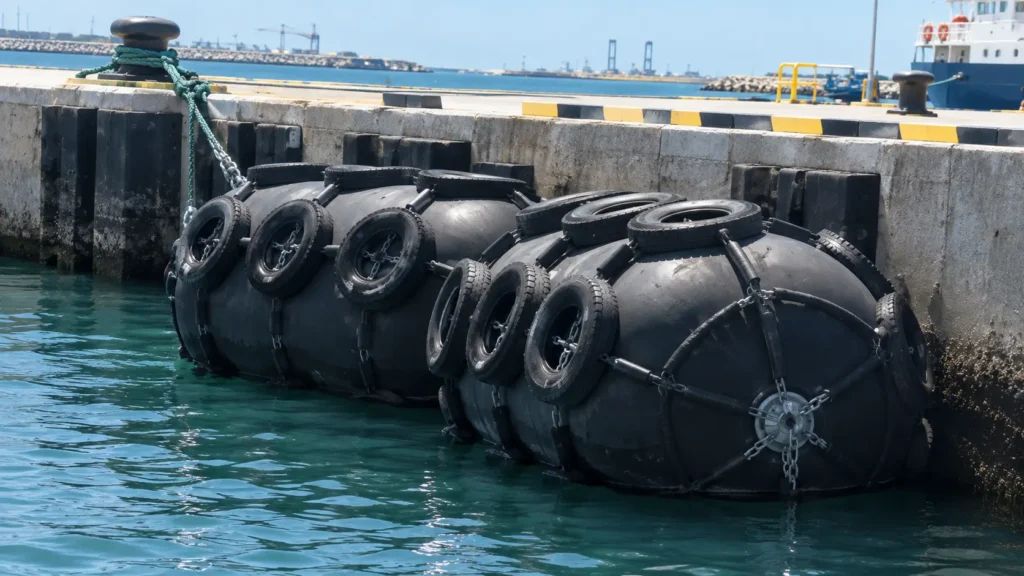
Pneumatic fenders are rubber shells filled with air. They are the ones you tend to see at commercial ports and offshore oil platforms, where the vessels are large, the traffic is varied, and conditions can change within an hour.
What makes them useful is that they can be set up for very different jobs. The air pressure, the size of the unit and how it is attached all change how the fender responds. That flexibility is why they suit a port that receives everything from workboats to larger cargo vessels. Our pneumatic range is built to recognised ISO standards, so it fits within the kind of specification many port and offshore projects ask for.
They do ask a bit more from the people looking after them. Air pressure needs checking, the outer skin should be inspected for cuts or abrasion, and units that hang over sharp concrete edges need protection. A pneumatic fender that is neglected will still work for a while, but it will not work as well as one that is looked after.
A practical tip: Before you order, ask yourself where the fender will actually sit against the vessel. A pneumatic unit hung in the wrong place can roll or slip, and no amount of air pressure fixes a bad position.
Foam Filled Fenders: Light, Floating and Easy to Handle
Foam filled fenders work on a different principle. Inside the outer skin is a lightweight, highly elastic EVA foam, and that foam does the cushioning. Because the marine fenders are buoyant, it floats. That makes it a natural match for pontoons, marina berths and any structure wherze the water level rises and falls a lot.
On a busy marina, handling matters. A foam fender can be moved and repositioned by hand, which saves time when crews are rigging for a berth that changes from one day to the next. There is also no inflation to monitor, so one common maintenance task simply disappears.
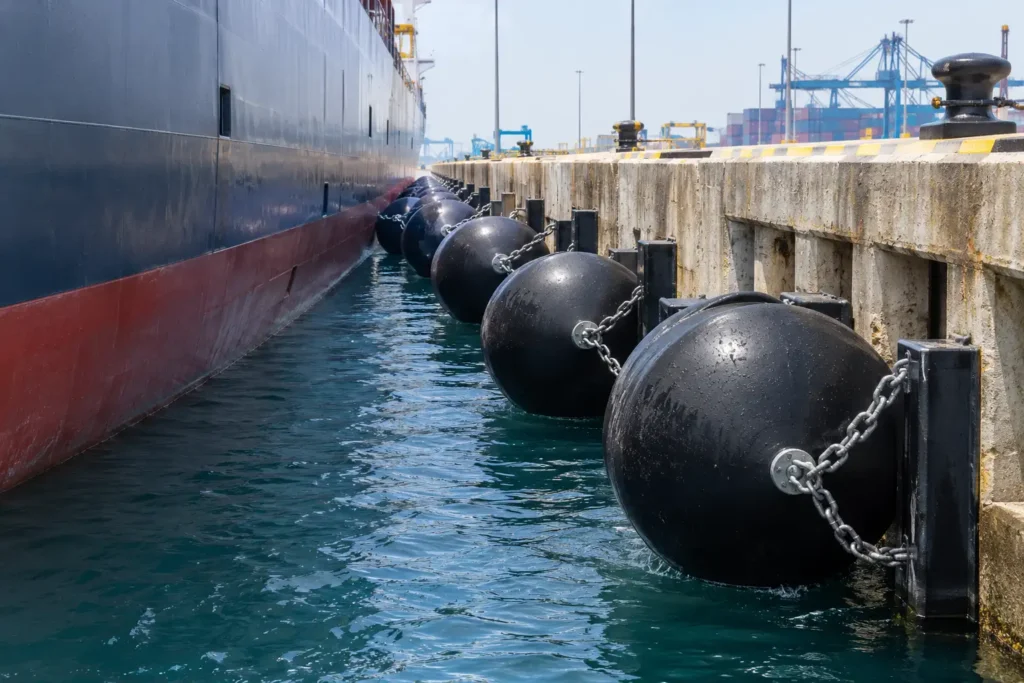
The honest limit is size and duty. Foam filled fenders are well suited to lighter vessels and gentler berthing. If you put one on a quay that sees large, fast arrivals every day, you will be asking more of it than it was built for. The usual mistake is choosing based on price or ease of fitting, then finding the fender wearing out much sooner than expected.
Fixed Rubber Fenders: The Dock Bumper That Stays Put
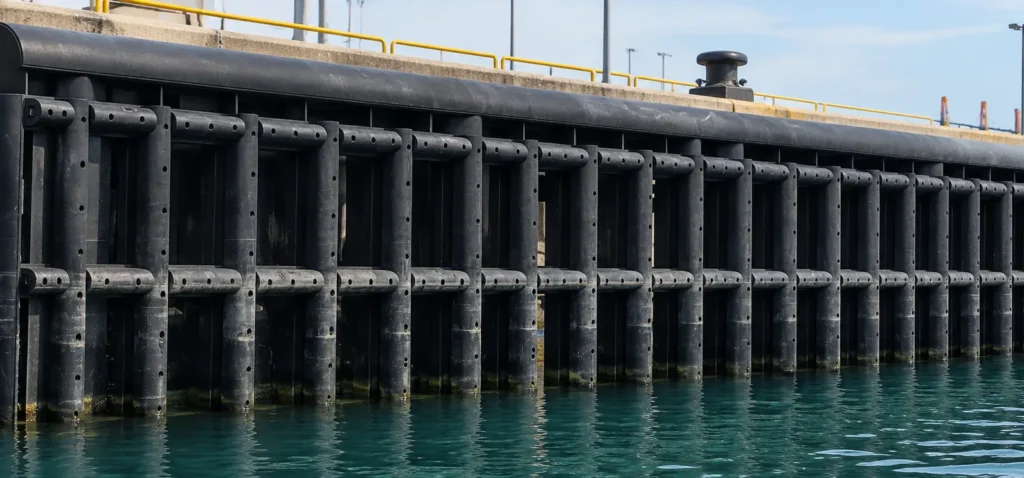
Fixed rubber fenders, also called dock bumpers or dock buffers, are bolted directly to the wharf. Their job is to stop the vessel from colliding with the quay while it docks. They are the simplest of the three to understand: a solid rubber block, a fixed position, and a clear point of contact.
This simplicity is their strength. Nothing to inflate, nothing to float away, and very little to go wrong on a quay with a steady pattern of arrivals. A well-specified fixed rubber fender can stay in service for a long time with periodic checks on the bolts, the surface and the alignment.
The catch is that once a fixed fender is installed, the layout is effectively decided. If the berth is later extended, the vessels get bigger, or the approach changes, you may find yourself rethinking the whole arrangement. That is why it is worth planning the fender line before concrete is poured, not after.
Explore the full Pneumatic Fender, Foam Filled Fender and Fixed Rubber Fender ranges
How They Compare
Here is a practical way to look at them side by side. This is a general guide, so the exact fit always depends on the site.
Pneumatic | Foam Filled | Fixed Rubber | |
How it’s fitted | Hung or attached around the vessel’s contact points | Floating or hung; handled easily by hand | Bolted to the wharf or quay face |
Where it’s used | Commercial ports, offshore oil platforms | Marinas, pontoons, floating berths | Fixed quays, jetties, wharves |
What it asks of you | Pressure checks, skin inspection, protection from edges | Inspection of skin and attachments | Bolt checks, surface wear, alignment |
Best suited to | Large and varied vessels, demanding sites | Lighter vessels, floating structures | Predictable traffic at fixed structures |
Bollards and Fenders Work Together
A fender protects the hull. A bollard holds the vessel in place once it is alongside. On most berths you need both, and they work best when they are planned as one system.
Our mooring bollards are built for jetties, berths, wharves and dolphins in ports and harbours, and they offer a simple, cost-effective way to secure a vessel. If the bollards sit too far from the fenders, the ship can end up in a spot where the fenders are not doing their job. Sorting out positions for both at the same time saves you from that problem later.
We’ll help you narrow it down. Before you get in touch.
Four Questions to Ask Before You Choose
Before you pick a type, go through these with the people who will actually run the berth:
- What vessels will use it? Size, hull shape and typical approach speed matter more than most buyers expect.
- How often will they arrive? A berth that sees constant traffic needs a different level of robustness than one used a few times a month.
- What is the structure made of? A concrete quay, a timber pier and a floating pontoon each suggest a different starting point.
- What can your team realistically maintain? The best fender on paper is the wrong fender if nobody has time to check it.
Quick tip: if the answers point in different directions, you may need a mix of types across the same berth. Many good setups use one fender type on the quay face and another where the structure floats.
Not Sure Which One Fits Your Berth?
This is exactly the kind of decision our team at Bay Marine helps with. We supply pneumatic, foam filled and fixed rubber fenders, along with mooring bollards, and we also offer installation, maintenance and custom fabrication when a standard product doesn’t quite fit the site.
Send us a few details about your vessels and your structure!
Frequently Asked Questions
1. What types of marine fenders are suitable for UAE ports?
The design of the port and the type of vessel using it should dictate the type of marine fenders that you select. Pneumatic marine fenders should be used for large, heavy vessels. Foam-filled marine fenders are appropriate for small commercial vessel berths. Rubber marine fenders should be used for busy, fixed quays.
2. What are the differences between pneumatic and foam-filled fenders?
The majority of pneumatic fenders are built to be flexible in how they are used. In fact, many are multi-purpose, with pneumatic marine fenders frequently serving larger, more diverse roles. Conversely, most foam marine fenders are smaller and meant for more lightweight vessels and softer berthing.
3. Is a dock fender the same as a fixed rubber fender?
Indeed. Fixed rubber fenders go by a few different names including dock bumpers and dock buffers. All these terms refer to the same equipment, which is mounted along the length of a pier or dock to provide protection to the dock and a vessel if there were to be an impact between the two while the ship is pulling into port.
4. Is it important to have marine fenders and bollards on a single berth?
In the vast majority of cases, it is vital to have both. Fenders absorb the energy of an arrival, while bollards serve to lock the vessel into position. Therefore, installing them in conjunction results in a significantly more dependable setup.
5. How do I go about choosing the right marine fenders for a ship?
You must evaluate vessel size, frequency of docking, berth construction materials, and the level of upkeep your team can manage. Simply share all this information with a marine fenders supplier, and they will quickly present you with your options.